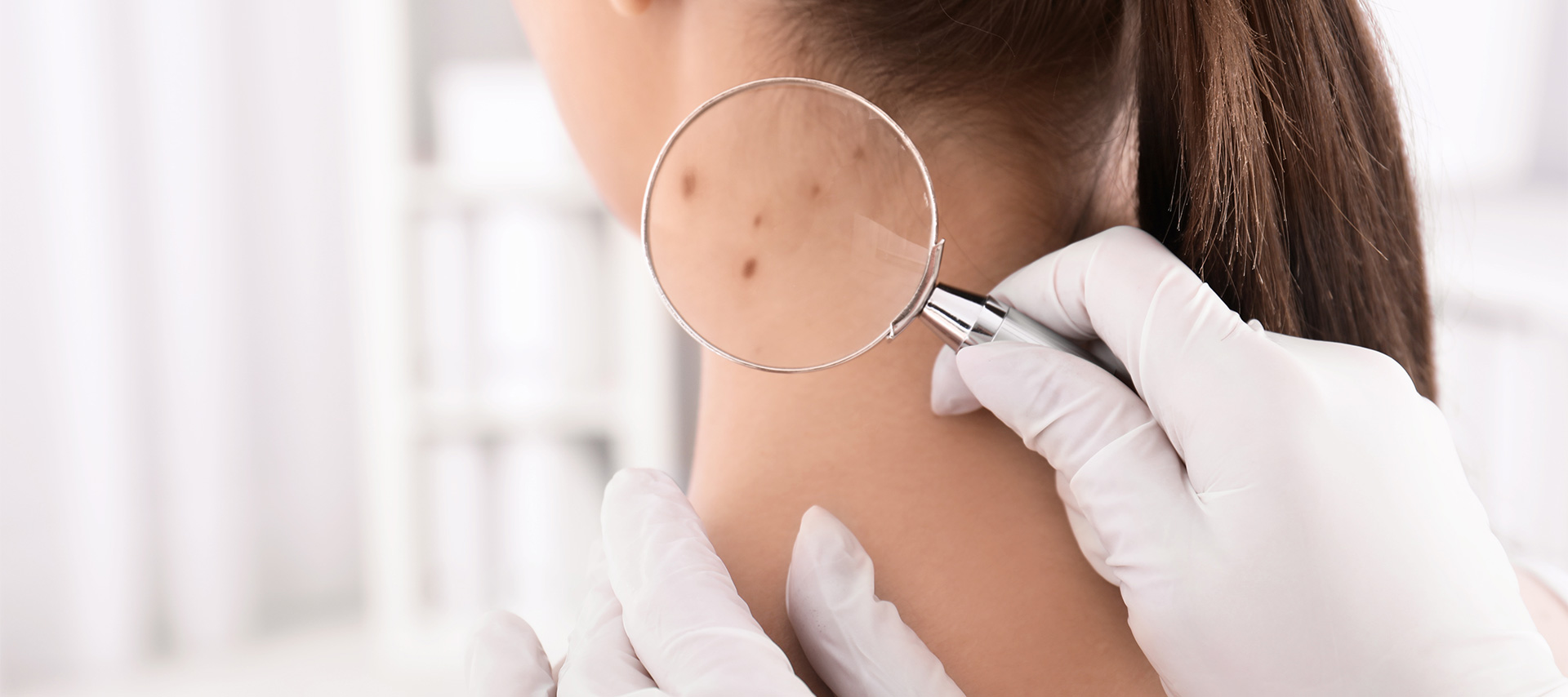

Have a spot you’re worried about? Don’t wait for your next GP visit. Sun Smile Clinic offers same-day skin checks by experienced skin cancer doctors in dedicated skin cancer clinic.
You’ve noticed something on your skin. Maybe it’s a mole that looks slightly different from last month, a rough red patch that won’t go away, or a spot that occasionally bleeds on its own. And now you’re staring at it in the mirror wondering: Is this something I need to get checked?
That instinct to take a second look is worth trusting. Australia has one of the highest rates of skin cancer in the world — and the difference between a simple, in-clinic skin lesion removal and a complex treatment often comes down to how early you act. This guide will walk you through exactly what warning signs matter, when skin lesion removal is necessary, and what to expect when you visit a skin cancer doctor.
Australians will be diagnosed with some form of skin cancer before the age of 70 — the highest lifetime risk of any country in the world.
What Is a Skin Lesion?
A skin lesion is any area of skin that looks or feels different from the surrounding skin. This is a broad term that covers everything from ordinary moles, freckles, and age spots to more concerning growths that may require prompt medical attention.
Not all skin lesions are dangerous. Many are entirely benign — meaning they pose no health risk. But because cancerous lesions often start small and can closely resemble harmless spots, it is always safer to have a qualified skin cancer doctor assess anything that looks unusual, is changing, or that you simply weren’t born with.
Common types of skin lesions include:
- Moles (nevi) — Usually harmless, but require monitoring for changes in shape, colour, or size
- Solar keratoses (actinic keratoses) — Rough, scaly patches caused by sun damage; considered pre-cancerous
- Basal cell carcinoma (BCC) — The most common skin cancer; often a pearly bump or flat scar-like area
- Squamous cell carcinoma (SCC) — A firm red nodule or flat lesion with a scaly surface; can spread if untreated
- Melanoma — The most dangerous form; can appear as a new spot or an existing mole that is changing
- Seborrhoeic keratoses — Waxy, stuck-on-looking growths; almost always benign
- Dermatofibromas, skin tags, cysts — Benign, but occasionally removed for comfort or cosmetic reasons
The ABCDE Rule: Your At-Home Warning System
Dermatologists and skin cancer doctors use the ABCDE rule as a simple, reliable framework for identifying melanoma and other potentially cancerous lesions. Any spot that ticks one or more of these boxes deserves a professional evaluation — and prompt skin lesion removal if confirmed.
One half doesn’t match the other. Normal moles are usually symmetrical.
Ragged, notched, blurred or uneven edges are a red flag.
Multiple shades of brown, black, red, white or blue in the one spot.
Larger than 6mm (the size of a pencil eraser) — though smaller lesions can still be cancerous.
Any spot that is changing in size, shape, colour, or behaviour over weeks or months.
Important: The “E” — Evolving — is widely considered the most critical indicator. A spot that is changing is a spot that must be seen, regardless of how innocent it may otherwise look.
When Should You See a Skin Cancer Doctor? (Don’t Wait on These Signs)
Many people delay booking an appointment because they hope a suspicious spot will simply go away. It usually won’t — and in the case of skin cancer, delay is the single biggest factor that transforms a straightforward skin lesion removal into a more complex, costly, and risky situation.
 See a Skin Cancer Doctor Urgently If Your Lesion:
- Has changed in size, shape, or colour in the past few weeks or months
- Bleeds without being injured — or bleeds repeatedly
- Itches, crusts, oozes, or scabs over without healing
- Has irregular, ragged, or poorly defined borders
- Looks noticeably different from every other spot on your body (the “ugly duckling” sign)
- Has been present for more than 6 weeks and has not fully healed
- Is located in an area that receives regular sun exposure — face, neck, forearms, back of hands, scalp
- Is new and appeared after age 30, particularly if you have a history of significant sun exposure or sunburn
- Feels firm, raised, or unusually hard beneath the surface
- Is accompanied by enlarged lymph nodes in the nearby area
Even if none of these apply but you simply feel something looks “off,” trust your instincts and book an appointment. A qualified skin cancer doctor can examine a lesion with a dermoscope — a specialised magnifying instrument that reveals patterns invisible to the naked eye — and provide a definitive, informed assessment within a single visit.
Who Is at Higher Risk? Know Your Skin Profile
While anyone can develop a skin lesion requiring removal, certain factors significantly increase your risk and warrant more frequent skin checks — at minimum once a year, or even every six months:
- Fair or light skin, red or blonde hair, light-coloured eyes
- A history of blistering sunburn, especially in childhood or adolescence
- Personal or family history of melanoma or other skin cancers
- More than 50 moles anywhere on your body
- Living or working outdoors in Australia, particularly in Queensland, WA, or NSW
- Immunosuppression — from medication, illness, or organ transplantation
- Previous skin cancer diagnosis, even if successfully treated
- Occupation or hobbies that involve extended sun exposure
What Happens During a Skin Lesion Removal?
Once your skin cancer doctor has examined the lesion — often using dermoscopy — and determined that removal is appropriate, the procedure itself is typically straightforward and performed on the same day, right there in the clinic. Here is what the process generally involves:
Step 1 — Clinical Examination and Dermoscopy
Your doctor examines the lesion visually and with a dermoscope, assessing its structure, colour patterns, and borders. They review your skin history and any photographs of the spot over time.
Step 2 — Local Anaesthetic
A small injection of local anaesthetic is applied around the lesion. You will feel a brief sting, after which the area becomes numb and you will feel no pain during the procedure.
Step 3 — Removal
The doctor removes the lesion using the most appropriate technique for its type, size, and depth. This typically takes between 10 and 30 minutes.
Step 4 — Pathology
The removed tissue is sent to a pathology laboratory, where it is examined under a microscope by a pathologist. Results are usually available within 5–10 business days.
Step 5 — Review and Follow-Up
Your doctor contacts you with pathology results and advises on aftercare, any further treatment needed, and the recommended schedule for your next skin check.
Types of Skin Lesion Removal Procedures
The right removal method depends on the nature of the lesion — its type, size, depth, and location on the body. Your skin cancer doctor will recommend the most appropriate technique, which may include one or more of the following:
Surgical Excision
The most common method for suspected or confirmed skin cancer. The lesion is cut out with a scalpel along with a small margin of healthy surrounding tissue to ensure complete removal. The wound is closed with sutures and the specimen is sent to pathology. Ideal for BCCs, SCCs, and melanoma.
Shave Excision
Used for lesions that sit above or in the upper layers of the skin. The doctor uses a surgical blade to shave the lesion flush with the skin surface. A quick, minimally scarring option for raised benign or low-risk lesions.
Cryotherapy (Liquid Nitrogen)
Liquid nitrogen is applied to freeze and destroy superficial lesions such as solar keratoses, seborrhoeic keratoses, and warts. The treated area blisters, then peels away over 1–2 weeks. No sutures required.
Curettage and Electrodesiccation
The lesion is scraped away with a curette, and a small electric current is used to destroy remaining cells and seal the wound. Suitable for certain superficial BCCs and SCCs.
Punch Biopsy / Excision
A circular punch tool removes a small core of tissue — used both for biopsy diagnosis and for removing small lesions entirely. Quick and precise, particularly useful for areas like the face.
Mohs Micrographic Surgery
A specialised technique reserved for skin cancers in cosmetically sensitive or high-risk areas (face, ears, nose). Thin layers of tissue are removed and examined under a microscope in real time until all cancer cells are eliminated — maximising the preservation of healthy skin. Highly effective cure rates.
Aftercare: Helping Your Skin Heal Properly
Proper aftercare following skin lesion removal is essential to prevent infection, minimise scarring, and ensure accurate pathology results. Your doctor will provide specific instructions, but general aftercare guidelines typically include:
- Keep the wound covered and dry for the first 24–48 hours
- Clean the site gently once or twice a day with saline or clean water
- Apply a thin layer of petroleum jelly or prescribed antibiotic ointment to keep the area moist and promote healing
- Avoid swimming, heavy exercise, or submerging the wound until fully healed
- Protect the healing area from sun exposure — a healing scar is particularly vulnerable to UV damage
- Attend your follow-up appointment to have sutures removed (typically 5–14 days depending on location)
- Contact the clinic immediately if you notice increasing redness, swelling, warmth, pus, or fever
What If the Lesion Comes Back — Or Pathology Finds Cancer?
Receiving a pathology report that confirms skin cancer can understandably feel frightening. However, it is important to know that the vast majority of skin cancers diagnosed at an early stage are completely curable with straightforward skin lesion removal alone. Your skin cancer doctor will review your results, discuss the diagnosis honestly and clearly, and outline the recommended next steps — which may include a wider re-excision to ensure clear margins, or a referral to a specialist if indicated.
Melanoma caught at Stage I — before it has spread — has a five-year survival rate of over 98% in Australia. The earlier the diagnosis, the simpler the treatment, and the better the outcome. This is why acting on a suspicious spot today, rather than waiting, is never an overreaction.
How Often Should You Have a Professional Skin Check?
Given Australia’s unique UV environment, routine professional skin checks are recommended for all adults — not just those with a history of skin cancer. As a general guideline:
- Low risk individuals (no personal or family history, no unusual spots): every 2 years
- Moderate risk (fair skin, significant past sun exposure, multiple moles): every 12 months
- High risk (previous skin cancer, family history of melanoma, immunosuppression): every 6 months or as advised
- Any time you notice a new or changing spot — book immediately, regardless of your last check date
Between professional checks, perform a monthly self-examination in good light, using a hand mirror for hard-to-see areas like the scalp, back, and backs of the legs. Familiarity with your own skin is the single most powerful early detection tool you have.
Frequently Asked Questions About Skin Lesion Removal
When should I see a doctor about a skin lesion?
See a skin cancer doctor as soon as you notice a spot that is changing in size, shape, or colour; that bleeds without being injured; that itches or crusts without healing; or that simply looks different from everything else on your skin. Don’t wait to see if it resolves on its own — skin cancers do not heal themselves, and early removal leads to significantly better outcomes.
How do I know if my skin lesion needs to be removed?
You can’t determine this definitively without a professional examination. A skin cancer doctor uses dermoscopy and clinical expertise to assess whether a lesion is benign, pre-cancerous, or requires biopsy and removal. Any spot that concerns you is worth having checked — the appointment itself is quick, painless, and could save your life.
Is skin lesion removal painful?
Most skin lesion removal procedures are performed under local anaesthetic, so you will experience minimal to no pain during the procedure. You may feel mild tenderness or soreness at the site for a few days afterwards, which is easily managed with over-the-counter pain relief.
How long does skin lesion removal take?
Most procedures are completed within 15 to 60 minutes and are performed as a same-day, in-clinic procedure. You can typically drive yourself home afterwards and return to light daily activities immediately.
Will skin lesion removal leave a scar?
Some degree of scarring is normal after excision, particularly for larger or deeper lesions. However, experienced skin cancer doctors use precise techniques and careful wound closure to minimise scarring. Cryotherapy, shave excision, and laser treatments typically leave very minimal marks.
Can skin lesions come back after removal?
When a lesion is completely excised with clear margins confirmed by pathology, recurrence is uncommon. However, if you have had one skin cancer, you are at higher risk of developing others elsewhere on your body — which is why regular ongoing skin spot checks are essential even after successful treatment.
Does Medicare cover skin lesion removal in Australia?
In many cases, yes. Skin checks and skin lesion removal procedures — particularly those with a medical indication — are eligible for a Medicare rebate in Australia. Your clinic will advise you on the applicable item numbers and any out-of-pocket costs at the time of booking.
Have a Suspicious Spot? Don’t Leave It to Chance.
The team at Sun Smile Clinic offers comprehensive skin checks and expert skin lesion removal with same-day results where possible. Early action is always the right action.
sunsmileclinic.com.au · Experienced skin cancer doctors